About this blog

This Blog is named after an ancient gnoseological riddle which hints hidden, disseminated, omnipresent wisdom.
I invite you to search, listen and observe with me for "the word of tree, whisper of stone, and humming together of the abyss and stars."
Showing posts with label Something you might not know. Show all posts

2023/11/09

How I crashed the Open AI on my first encounter - asking questions about Greek vocabulary of love


I searched the Internet for articles on the Greek word AGAPE (love) and got really frustrated how oversaturated it was with shallow Christian philosophising, sermonising and unsubstantiated linguistics. I thought, now I know what is present on the Internet, let me now ask AI (my very first try of this thing) let me see how AI works with the stuff available to it on the Internet.

Well it struggled mightily, it was able to filter out most of the Christian lingo, but was clearly under the spell of those Christian resources and unable to liberate itself from Christian pseudolinguistics, and eventually it crashed.  

What is the meaning of the Greek word AGAPE?

The Greek word "agape" (ἀγάπη) generally refers to selfless, unconditional love or benevolent affection. It is often associated with the highest form of love, characterized by sacrifice, compassion, and care for others, regardless of their actions or circumstances. Agape love is not dependent on personal gain or reciprocation but is driven by a genuine concern and goodwill towards others. In some philosophical and theological contexts, it is seen as a divine or transcendent love that goes beyond human understanding.

Is there any other possible occasional meaning of the Greek word AGAPE beside selfless love?

Yes, the Greek word "agape" can also be used to refer to a meal or feast. In ancient Greek culture, an "agape" was a communal meal shared among friends or members of a community. It was often associated with a religious or social gathering where people came together to share food, fellowship, and celebrate. However, it is important to note that the primary and most common meaning of "agape" is indeed selfless love. The occasional meaning of a meal or feast is less common and may vary depending on the specific context.

Any other possible meaning of AGAPE besides selfless love and a meal?

No, in the Greek language, the word "agape" primarily carries the meanings of selfless love and a communal meal. These are the most commonly recognized and used meanings of the term. However, it is worth noting that words can sometimes have expanded or additional meanings in different contexts or as they evolve within a language. So while it is possible that "agape" may carry other meanings in certain specific contexts, these would be less widely known or used beyond the primary meanings mentioned earlier.

And what about AGAPAO as a verb?

"Agape" functions as a noun, whereas "agapao" is the verb form derived from it. "Agapao" carries the primary meaning of "to love" or "to show love" in a selfless and sacrificial way. It is used to describe the act of demonstrating unconditional love, kindness, and affection towards others. This verb form emphasizes the action or expression of love rather than the concept or feeling of love itself. It is often associated with the idea of active, intentional love that is not based on personal gain or selfish motives.  (NOTE - ANSWER TOOK SUBSTANTIALLY LONGER)

Can you compare AGAPE with other Greek words for love?

Certainly! In Greek, there are several words used to describe different types or aspects of love. Here are a few notable ones:

1. Eros (ἔρως): This word refers to passionate, romantic love or desire. It is often associated with the physical and sensual aspects of love.

2. Philia (φιλία): Philia denotes friendship or affectionate love between friends or family members. It conveys a sense of camaraderie, loyalty, and deep connection.

3. Storge (στοργή): Storge refers to natural affection or familial love, particularly the bond between parents and children or within a family unit. It emphasizes a sense of familiarity, protectiveness, and attachment.

4. Agape (ἀγάπη): As discussed earlier, agape signifies selfless, unconditional love that is characterized by compassion, care, and sacrifice. It is a higher form of love that is not dependent on personal gain or reciprocation.

While these words are distinct, it is important to note that they are not always mutually exclusive. Love in its entirety is a multi-dimensional concept and can often encompass various elements from these different types of love.

Can AGAPAO be used for objects?  Can you give examples?

While the primary usage of "agapao" is to describe love towards people, it can occasionally be used metaphorically to express deep fondness or devotion towards objects or activities. However, it is important to note that this usage is less common and may depend on context. Here are a few examples where "agapao" can be metaphorically applied to objects:

1. One may say, "I agapao this book" to indicate a deep love or admiration for a particular book, perhaps due to its profound impact on their life or personal attachment to its content.

2. Similarly, someone may say, "I agapao this painting" to express a significant appreciation and emotional connection to a specific work of art.

3. One could also use "agapao" to describe love for an activity or hobby. For instance, someone might say, "I agapao playing the piano" to convey a deep passion and enjoyment for playing the instrument.

It should be noted that while the metaphorical usage of "agapao" for objects is possible, it is not as common as expressing love towards people or living beings.

Would you know what was the old (Homeric and possibly pre-Homeric) meaning of AGAPAO?

Yes, in ancient Greek literature, particularly in Homeric and pre-Homeric texts, the word "agapao" had a slightly different meaning compared to its later Christian and philosophical interpretations. In these early contexts, "agapao" was often used to convey a sense of preference, attachment, or fondness for someone or something, rather than denoting selfless, sacrificial love as it came to be understood later.

In the Homeric poems, such as the Iliad and the Odyssey, "agapao" is used to express affection, favor, or even desire. It can refer to the love between family members, as seen in the relationship between Odysseus and his son Telemachus. Additionally, it may be used to describe the desire or fondness that gods have for a mortal, or the attachment a king might have for his loyal subjects.

Over time, as Greek philosophical and theological thought evolved, the concept of "agape" took on deepened significance, moving towards a more selfless and universal understanding of love. This development is prominent in the New Testament of the Bible, where "agape" is often associated with divine or unconditional love.

So, while the early meaning of "agapao" included elements (ENDED MID-SENTENCE)

I read that AGAPAO meant "fond greeting". Is it so?

TOOK VERY LONG TIME - SEVERAL MINUTES AND THEN THIS MASSAGE APPEARED:

An error occurred. Either the engine you requested does not exist or there was another issue processing your request. If this issue persists please contact us through our help center at https://help.openai.com.

So I did not learn anything new. To the contrary, the first answers were shallow and banal. When prompted and asked about deeper meanings it struggled a little but eventually brought some correct answers (yet not particularly poignant and revealing). And when I asked a question it did not know, it pretended to crash...

And here is a link to a short video about this exchange and some more information.
https://youtu.be/JkLIl0wQ8Rw


2023/07/06

Should Women Be Silent?


Apostle Paul supposedly wrote to his mission church in Corinth:

Women should be silent in the churches.

They are not permitted to speak.

They should be subjugated

just as the Law says.

And if they have any question,

they should ask their husbands at home. 

Because it is shameful for a woman

to speak in church. (1 Cor 14:34f)

This is the holy mantra of all the Christian misogynists. They all use and abuse this short biblical passage of two verses, to justify their rejection of ordination of women, keeping them from being pastors or priests.

But with biblical scholars of 19 and 20th centuries I am certain that this verse was not written by Paul.


Firstly it simply does not make sense in the historical context of Paul’s churches.

            We know that Paul worked closely with women. Some women were leaders in his mission churches. In the letter to Philippians he, for instance, mentions Euodia and Syntyche, two women, as church leaders.

            And in the letter to Romans in the final salutation he mentions several women as important members and leaders of the church. A number of whom he named as co-workers and especially there is Junia, who is being called a fellow apostle - the highest rank among the ministers of the earliest church.


Secondly it does not make sense within the context of Paul theology.

            Because in Paul’s eschatology driven theology - in expecting a new divine order coming any moment - Paul rejected all superficial (cultural and social) human distinction.

There is no longer Jew or Greek,

there is no longer slave or free,

there is no longer male and female;

indeed all are one in Christ Jesus.

To quote a well known passage from the letter to Galatians 3:28

            But furthermore, the simplistic argument from the Law (They should be subjugated just as the Law says.) does not fit at all with the Paul’s theology of the Law.

For the genuine Paul, the Law was the theological force of the past. It was superseded by Christ. To quote Paul directly: Christ is the end of the Law (Rom 10:4) Or Paul from his letter to Galatians Christ redeemed us from the curse of the law (Gal 3:13). There is simply no other place in the genuine Pauline letters with this kind of argument from the Law.


Finally, there are serious textual reasons indicating that Paul did not write these two verses.

            These two verses are clearly an example of an interpolation. Some early scribe who was copying the letter inserted this misogynistic instruction into the existing text of the letter. It very likely happened in the late 2nd century. One sign that it is an interpolation is the fact that if you leave this passage out, the text actually reads better, it flows more smoothly.

And furthermore some early manuscripts, predominantly from the western tradition, actually attach this instruction at the end of the chapter fourteen. Such textual instability is always an indication of the early suspicions about this text’s authenticity.  


So these are historical, theological, and textual reasons for serious doubts about the apostolic authority of these two verses. And that is something worth repeating, repeating, and repeating to all the Christian misogynists. Because women played an important role in the early church (unlike in Hellenistic Judaism and in Orthodox Judaism until today, unlike Roman Church and Eastern Orthodox Churches, unlike Christian fundamentalists and traditionalists throughout the centuries and also until today).

            In reality, the inclusion of women in the ministry was something which went back all the way to Jesus and his group of disciples. Join us this Sunday as we continue reading biblical passages unique to Luke. Among the evangelists it was especially Luke who lifted up and defended the role of women in the early church.


Video version of this blog: https://youtu.be/vFfoJYaG8Zw

2022/06/17

Ugaritic Yom Kippur

Among religious texts from Ugarit is also a beautiful and deeply meaningful liturgy of communal penitence. It is a Canaanite, pagan, Late bronze version of Yom Kippur now known refered to as KTU 1.40. Thus this liturgy is more than three thousand years old and easily predates anything we have in the Bible by hundreds of years.

            In that liturgy, sons of Ugarit, citizens and resident aliens, government, including the vizier, and the king beg forgiveness from a long list of social, national, and ethnic groups. They beg forgiveness for whatever might compromise their integrity in relationships with the Qatians, the Dadmians, the Churians, the Hettites, the Cypriots, the Hebrews, all the subjects, all the poor, all the refugees, by their anger, impatience, any transgression, for any missteps in sacrifices or dues. (Some of it is conjecture, but the intention of this liturgy is clear.)   

            And these petitions by men are followed word-for-word in an almost absolute parity by petitions from daughters of Ugarit, including the Queen and her court.

            The clay tablet with this liturgy is unfortunately broken and badly damaged, but these petitions were clearly repeated a number of times with different sacrifices. From what we can guess, at least three times for sons of Ugarit and three times for daughters of Ugarit.

            I find this bronze age liturgy moving and deeply meaningful. Just imagine in our own times that instead of the self-congratulatory and boastful State of the Union Address we would have this tradition of an annual national holy day of repentance in which the president, all the secretaries, all the dignitaries and supreme court justices would come together and lead the nation in repentance doing nothing but humbly asking all the poor, the homeless, the immigrants, all the racial, national, cultural or gender minorities, all the international partners and enemies, expressing sadness and asking for forgiveness! Not once, not twice but six times and possibly the seventh time for good measure. And afterwards they would personally serve the people a lavish meal paid from their own pockets.


These are the ancient pagan roots of the biblical day of Atonement, and the Jewish Yom Kippur until today. And quite likely something you might not know about the Bible and the biblical roots and background.


Join us this Sunday - we will talk about atonement and what the medieval church and after them the fundamentalists until now did and still are doing to the concept of repentance by developing atrocious dogma of substitutionary atonement. We will reject this harmful and blasphemous dogma and will seek more hopeful and healthier alternatives.


Video clip version can be watched here: https://youtu.be/M488DnmNXQo

2022/02/24

God against censorship

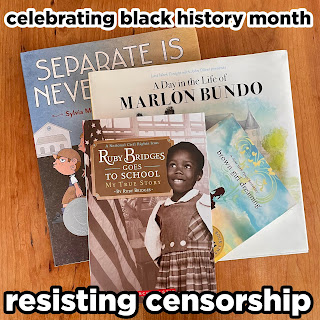
American white evangelicals have been recently up in arms, yelling at teachers and being rude at school board meetings, attempting to ban books from classrooms and school libraries, demanding gagging orders forbidding teachers to talk about race or LGBT issues. Dozens of innocent books have been banned.
     And it did not stop at school boards! There are now more than 150 legislative bills introduced in 38 states of our union that attempt to censor what teachers are allowed to say or teach in their classrooms.
      It is quite upsetting but also mildly amusing coming form specifically those groups. How come these racist fundamentalists don’t know their bibles? Or are they just hypocrites and their “Christianity” is just a cloak for bigotry and racism? In the Bible there is a story about censorship with a lesson they certainly should hear and learn.
      In Jeremiah 36 we hear how scribe Baruch wrote down Jeremiah’s prophecy King Jehoiakim, probably unable to read, asked it to be read to him, and as they were reading it, the king would use his knife and cut it and burn it piece by piece until he burned the entire scroll. King thought, that was the end of it.
      But God commanded Jeremiah: Get another scroll and write in it all the words that were in the original burned scroll. And so Jeremiah took another scroll and gave it to his scribe, and he dictated and Baruch recorded all that has been burned. Only this time, it has been substantially expanded!
     So here you have it! The Bible itself is teaching that burning books and censorship are impotent and futile. And that is something you might not know about the bible. And that is also good news for all freedom loving people everywhere. Freedom loving, free consciousness loving, free spirit loving, freedom of speech loving. And for us in our current context there is reassurance to fight back censorship. Any racist attempts to censor black history will NOT succeed.

And if you read this far: there is another interesting biblical exegetical aspect and theological insight.
     The story about the burning of a prophetic scroll from Jeremiah 36 has a close antipodal parallel in the 2 Kings 22 in a story about the discovery of the Torah scroll in the temple supposedly at the time of king Josiah.
     Modern scholarship suspects that both these stories are in fact much later literary fictions. They required certain conceptual and mentality preconditions among the authors as their audience. It could have been written and made sense to the readers only after they encountered and became familiar with the Babylonian legal tradition and especially after they experienced the Persian administration relaying on written documents.
     The Persian setting - after the time of Ezra, Nehemiah - is to me the terminus post quem and possibly a much later moment for creation of these literary fictions. They are two complementary parts of the same biblical sermon teaching something similar to this - When encountering a challenging, uncomfortable writing – we all can chose – do we want to be like Josiah embracing the text and learning from it or do we want to be like Jehoiakim burning it?
     Recognizing this connection and dating this dual sermon to the Persian period or even later makes this argument only stronger and more plausible. This late Persian, and possibly even Hellenistic homily about two approaches to the challenging message is another aspect you might not know about the Bible. It might be a literary fiction but at the same time a powerful encouragement not to burn, ban or censor uncomfortable books but to study them and take them seriously.

2022/01/20

Was Jesus illiterate?

Mapping the US book deserts.
A percentage of homes with at least 100 books.
Interactive map can be found here.

Video version of this blog can be found here on YouTube.
 
Scholars and theologian are all but unanimous that Jesus and his Galilean disciples were almost certainly unable to read or write. But please, note that I did not call them illiterate! That would be a gross misrepresentation of their reality. Modern scholarship calls such people nonliterate.
            There is an important distinction between illiterate and nonliterate. Illiterate are people who had opportunity to learn reading and writing and yet had never done so. Meanwhile nonliterate persons are those who never had the chance to learn these skills because they lived in a society where hardly anyone could read or write. Such a setting is being described as preliterate society.
            In our world and time illiteracy often comes with a stigma, a value judgement about the person’s mental acuity. In the preliterate society inability to read and write was common and did not come with such a stigma.
            Literacy all around the Ancient Mediterranean world was about 5%. And our best estimates of literacy among the Jews living in Palestine (from Judea to Galilee) was hardly any larger. And those literate were members of an elite class, who almost certainly did not live in a Galilean rural hamlet like Nazareth. The setting of Jesus’ movement was indeed an oral,  preliterate society. And Jesus and his disciples’ inability to read did not mean they were stupid.
            On the contrary, anthropologists tell us that nonliteracy gave people some unique and special faculties. Preliterate oral cultures had a phenomenally better narrative memory. From my study of Hawaiian history and culture I am aware of early missionaries in Hawai’i reporting with  astonishment the ability of nonliterate locals to reliably memorize entire biblical books. And that has been reported all over the world.            Mental capacities of nonliteral peoples are not hindered by literacy. Their intellect is not under the spell of the written. They have a different, intuitive, and broader, more holistic, perception of reality.
            In addition and interestingly, to my best knowledge, all the main world religions were born in this twilight zone of literacy, inspired by nonliterate founders, and only later scriptualized - written down. In fact if Jesus and his first Galilean disciples were literate, it would had been a highly irregular and hence suspicious.
            The very fact that Jesus and his first disciples were nonliterate, the fact that there was a period of oral transmission, the fact that the Bible was written only about a generation or two later, all of it is an important factor which we normally do not fully appreciate but which was a contributing reason that we have Christianity and our New Testament Bible.  And that is something you might not know about the Bible.  
 
Join us this Sunday when we will discern and contemplate the only one New Testament story about reading Jesus (Luke 4:16ff). It might be a wishful projection of a highly educated evangelist, but exactly as a projection it still contains a beautiful and powerful message of divine love and respect for everyone, and especially for those left out and forgotten.

2022/01/13

Revolution in Heaven

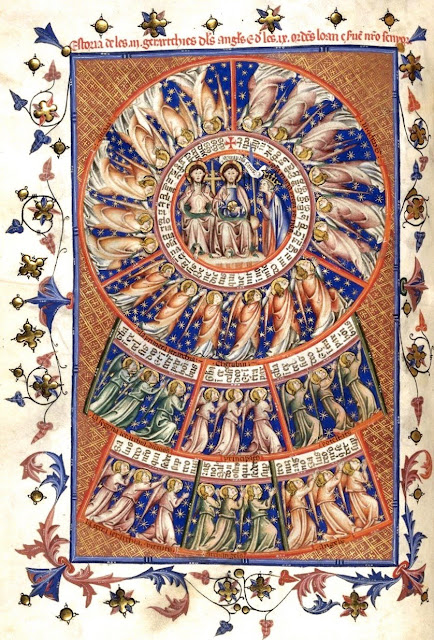
Nine classes of angels in three spheres depicted in a medieval manuscript.

Have you heard about the revolution in heaven? Have you heard how Jesus overthrew the heavenly hierarchy?

     First I need to explain the angelic hierarchy. The ancient polytheistic peoples were familiar with the notion of the divine court. Greeks situated it on Mt. Olympus. North West Semitic people looked up to Mt. Zaphon (modern Jebel Aqra). Of course the Hebrew Bible knew about Zaphon but there are also signs that Mt. Sinai, Mt. Zion or occasionally other mountains might play a similar role.

            A deepening process of monotheisation under the prophets like Isaiah or Jeremiah led to less interest in the divine court. But then, it found its way in again during the late biblical period under the influence of apocalyptic writings such as Ezekiel or Daniel. In this stage, what used to be deities were replaced with throngs and retinues of angels. The angelic hierarchy was imagined and structured according to Hellenistic Royal Courts. Later the rabbis organised angels into no less than 10 classes or ranks. But the Jewish angelic hierarchy stayed rather fluent and even a little chaotic. For instance different cabalistic schools could have one class of angels, for instance Seraphim, in the highest rank as well as lowest rank and anything in between, depending on the author.

            Roman Catholic medieval Scholasticism put angels in better order, probably inspired by needs of the medieval feudal church. Angels were organised in three large spheres and nine different classes. The highest sphere was for angels who were constantly in the presence of the divine and never left. Beneath them was the intermediary sphere of angelic functionaries mediating divine commands to the lower angelic sphere. The lowest angelic sphere was charged with execution of divine orders. Here were patrons of nations and royal houses, here were archangels in the second lowest class. Lower were only regular angels and the lowest of lowest of angels were the personal guardian angels, the blue collar angels, angelic proletarians. 

            Angelic hierarchy thus reflected medieval feudal structures of power but also represented the general human desire for order in the hierarchy of power. Image of heaven in Roman Church reflected medieval feudalism, in the Biblical times it reflected Hellenistic courts, among early Jews and pagans Zaphon, Sion or Olympus were perceived like Bronze Age royal palaces. (In heaven it was as it was on earth. When you think about it, it was the very opposite of one of the petitions of the Lord's Prayer.) 

            And then, Jesus, as was his well-established practice, turned this all upside down in one sentence.  Matthew 18:10 in my loose rendition - Don’t even think to disregard and neglect the powerless, I tell you, their guardian angels have direct access to God. (My loose translation.)

            The lowest, worldly, working angels, that angelic proletariat has direct access to God! That is revolution in heaven. As if Jesus said, Stop projecting your human corrupt power structures to heaven! Rather, change your human structures according to the egalitarian heavenly model which I bring and preach to you. 

            That is what I call the revolution in heaven. The overthrow of imaginary heavenly hierarchy and by the way the utter abrogation of heavenly and earthly feudalism or any other abusive power structures which humankind is so eager to create and recreate.

            The first are last and last are first in heaven! And the first will be last and the last will be first in bright divine future. And you should start living it out now.


And that is something you might not know about the Bible and Jesus’ radical angelology.


Video version of this article can be found on Rutgers Church YouTube


And here it is being explained to children in virtual Children Message